
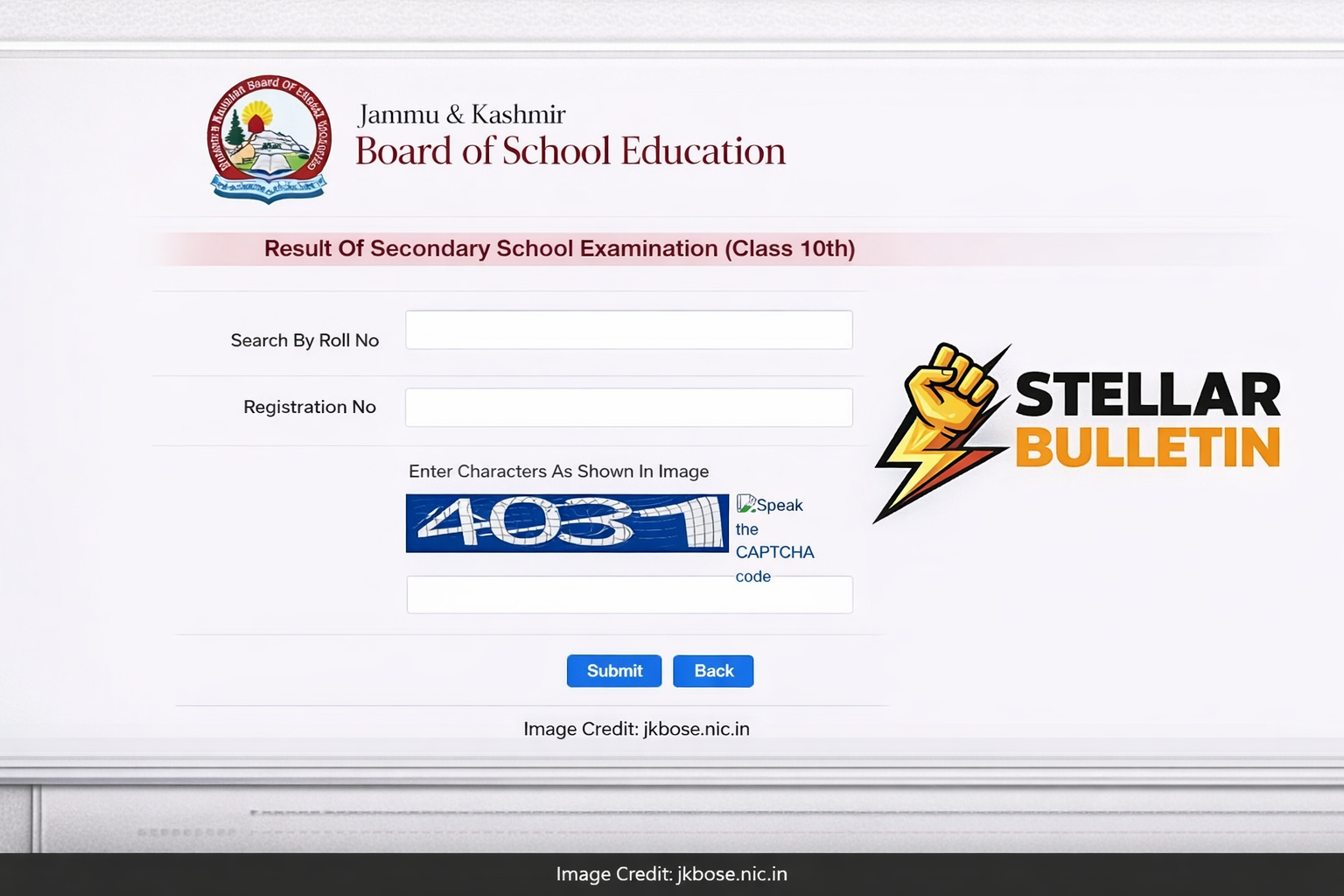
The wait is finally over for thousands of students in Jammu, Kashmir, and Ladakh! The JKBOSE has officially announced the Class 10 annual regular results for the 2025 October-November session, recording an impressive overall pass percentage of 85.03%. In a display of academic excellence, female candidates took a slight lead this year with a success rate of 85.78%. Whether you’re looking for the roll number-wise list or a step-by-step guide on how to download your digital marksheet from jkbose.nic.in, we have everything you need to know right here.
JKBOSE Class 10 Results 2025
The wait is finally over! As of today, January 14, 2026, the JKBOSE has officially declared the results for the Class 10 annual exams (October-November 2025 session). If you took the exam, you can head over to jkbose.nic.in right now to check your scores.
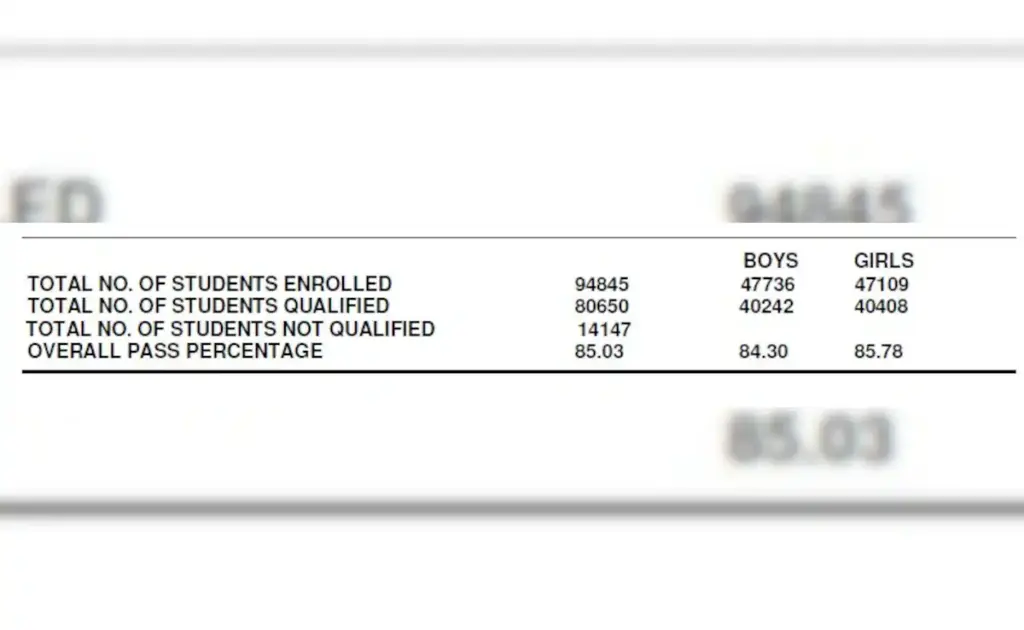
It’s been a fantastic year for the students, with a solid overall pass rate of 85.03%. The girls have taken the lead this time around, outperforming the boys slightly with a passing percentage of 85.78% (that’s 40,408 female candidates qualified). The boys weren’t far behind, though, securing a success rate of 84.30%, with 40,242 students clearing the hurdle.
Jammu Kashmir Class 10 Result 2025: How To Download Result?
- Go to the Portal: Visit jkbose.nic.in and navigate to the results section.
- Select the Link: Click on the notification for the “Class 10 Annual Regular Results.“
- Enter Credentials: Provide your roll number or registration details as requested.
- View Results: Click “Submit” to view your marks on the screen.
- Save a Copy: Download the digital marksheet and keep a printout for future admissions.
Gazetted Download Link: Click Here To Download The JKBOSE 10th Results 2025
JKBOSE Class 10 Annual Regular Results (October-November Session) Declared — 84% Pass Percentage Recorded
In a significant development for the academic landscape of the Union Territories of Jammu & Kashmir and Ladakh, the Jammu and Kashmir Board of School Education (JKBOSE) has officially declared the results for the Class 10 annual regular examinations for the October-November 2025 session. The announcement, made today, January 14, 2026, marks the culmination of months of hard work, anticipation, and anxiety for tens of thousands of students, parents, and educators across the region. With an impressive overall pass percentage of 84%, the results stand as a testament to the resilience and dedication of the student community, particularly given the unique climatic and logistical challenges faced during this academic cycle.
The Class 10 board examination, often regarded as the first significant academic threshold in an Indian student’s life, serves as a gateway to higher secondary education and future career pathways. For the students of the Kashmir division, the winter zone areas of the Jammu division, and the Union Territory of Ladakh, this specific session holds immense weight. It dictates their stream selection for the upcoming higher secondary years—whether they will pursue Science, Commerce, or the Arts/Humanities. The declaration of these results is not merely an administrative procedure; it is a celebratory event that validates the academic rigor of the region’s schools and the perseverance of its youth.
Detailed Overview of the Declaration
The JKBOSE administration released the results on the morning of Wednesday, January 14, 2026. The results are now available for public access on the official board website, jkbose.nic.in. According to official reports, the results pertain specifically to the “October-November Session,” which covers the winter zone schools. This session is distinct due to the geographical and climatic variances in the region, which necessitate a different academic calendar compared to the summer zone areas.
The sheer scale of this examination cycle is noteworthy. Approximately 94,000 students participated in these exams. This cohort includes candidates from the entire Kashmir division, the winter zone areas of the Jammu division, and students from the distinct Union Territory of Ladakh. Organizing and conducting examinations for nearly a lakh students across such diverse and often difficult terrain is a logistical feat, and the timely declaration of results in mid-January ensures that students have ample time to plan their admissions for the next academic session without losing precious time.
Statistical Analysis: The 84% Success Rate
The headline statistic for this year’s result is the robust pass percentage of 84%. In the context of board examinations, where pass rates can fluctuate significantly based on paper difficulty and evaluation standards, an 84% success rate is indicative of a healthy educational ecosystem. It suggests that a vast majority of students have met the requisite learning outcomes set by the board.
While the raw number is impressive, it also tells a deeper story about the preparation levels of the students. Achieving this pass percentage implies that despite external disruptions, classroom learning and self-study regimes remained effective. For the 16% of students who did not manage to clear the examinations this time, the board typically offers recourse through bi-annual or private examinations, ensuring that no student is left behind permanently due to a single setback.
The distribution of these successful candidates spans across various districts, from the urban centers of Srinagar and Jammu to the remote highlands of Ladakh. Although a detailed district-wise merit list or gender-wise breakdown is usually released in subsequent analytical reports, the aggregate success rate sets a positive tone for the academic year 2026.
The Crucial Concession: 15% Syllabus Relaxation Explained
Perhaps the most critical aspect of this year’s result processing was the special concession provided by the JKBOSE authorities. The board had earlier announced a policy wherein students scoring 85% marks in the written exams would be statistically treated as having scored 100%. This effectively translates to a 15% syllabus concession.
This decision was not arbitrary but was a compassionate and necessary response to a series of environmental disruptions that plagued the academic calendar. The region witnessed severe heat waves during the summer months, followed by torrential rains, cloudbursts, and consequent flooding. These natural calamities forced the closure of schools for extended periods, disrupting the continuity of classroom teaching. In many remote areas, where digital connectivity for online classes can be spotty, such closures result in a direct loss of learning hours.
Recognizing that it would be unfair to evaluate students on the full syllabus when they physically could not attend classes for the full duration, the board implemented this relaxation. This policy ensured that students were not penalized for circumstances entirely beyond their control. It leveled the playing field, allowing students to attempt the portion of the syllabus they had covered effectively, without the stress of questions from uncovered chapters affecting their final grade. This proactive measure by JKBOSE has likely contributed significantly to the high pass percentage seen today.
Step-by-Step Guide: How to Access the Results
With the results now live, traffic to the official website is expected to be heavy. Students and parents are advised to follow a systematic approach to accessing their scorecards to avoid confusion.
- Official Portal Access: The primary source for the results is the website
jkbose.nic.in. Students should ensure they are visiting the correct URL and not third-party aggregators, which might have delayed or cached data. - Navigating the Interface: Upon landing on the homepage, users should look for the main menu or the “Results” notification bar. The specific link to look for is labeled “Result of Secondary School Examination (Class 10) Annual Regular 2025” or similar wording indicating the Oct-Nov session.
- Inputting Credentials: The system primarily relies on the Examination Roll Number or Registration Number. It is crucial to have the admit card handy. Enter the digits carefully; a single typo can lead to an “Invalid Roll Number” error, causing unnecessary panic.
- Viewing and Downloading: Once the details are submitted, the result mark sheet will appear on the screen. This digital mark sheet contains the student’s personal details, subject-wise marks, total score, and qualifying status.
- Documentation: Students must download a soft copy (PDF) and print a hard copy of this mark sheet. While the original certificate will be issued by the schools later, this internet-generated copy serves as a provisional document for provisional admissions in Class 11.
Troubleshooting: In the hours immediately following the declaration, the official website often crashes due to a server overload. If the page does not load, students are advised to wait for 10-15 minutes and try again. Clearing the browser cache or trying an alternative browser can sometimes help.
Regional Context: Education Amidst Challenges
To fully appreciate the significance of these results, one must understand the context of the region. The academic cycle in the Kashmir division and winter zones of Jammu is unique. Unlike the rest of India, which follows a summer-to-summer cycle, these areas follow a winter cycle due to the harsh weather conditions that make schooling impossible in December and January.
Students here battle sub-zero temperatures and heavy snowfall. In Ladakh, the challenges are even more acute due to the extreme altitude and isolation. Furthermore, the region has historically seen disruptions due to political instability, though recent years have seen a stabilizing trend focusing heavily on educational continuity.
The students who passed today have studied through these geographical hardships. Their 84% pass rate is not just a number; it represents study sessions by candlelight during power cuts, trudging through snow to reach tuition centers, and maintaining focus despite the uncertainties of weather. The inclusion of Ladakh UT students in this result declaration highlights the unified administrative efforts to streamline education across these strategically vital territories.
The Road Ahead: Career Pathways and Class 11
With the Class 10 hurdle crossed, students now face the pivotal decision of choosing a stream for Class 11. This decision largely shapes their professional future.
- Science Stream: Typically the most sought-after, this is for students aspiring for careers in Engineering (Non-Medical) or Medicine (Medical). The high pass percentage suggests a large influx of students into this stream.
- Commerce Stream: For those interested in finance, accounting, business management, and economics. This stream has seen growing popularity in J&K as the local economy diversifies.
- Humanities/Arts: Often unfairly stigmatized, this stream is actually the bedrock for careers in civil services, law, journalism, and academia. Students with a flair for languages and social sciences should consider this seriously.
It is vital for parents to support their children’s choices rather than imposing their own aspirations. Career counseling, whether professional or through school teachers, becomes essential at this stage.
Anticipation for Class 12 Results
The declaration of the Class 10 results has naturally heightened the anxiety for Class 12 students. The article notes that Class 12 results are also expected “anytime soon today.” Class 12 results are arguably even more critical as they determine university admissions. The synchronized release of these results indicates that the JKBOSE evaluation machinery has been working overtime to ensure all students can transition to their next phase—whether it be college or higher secondary school—without delay.
Mental Health and Coping Mechanisms
While today is a day of joy for 84% of the candidates, it is crucial to address the remaining 16% who did not qualify. Failure in a board exam can feel devastating to a teenager. Parents and educators play a vital role here. It is important to reinforce that this is a temporary setback, not a life sentence. The “Bi-annual” exams provide a second chance. Many successful individuals have faced academic hurdles early in life. A supportive environment that focuses on analyzing what went wrong and planning for the re-examination is far more productive than criticism.
For the successful students, the euphoria should be balanced with the realization that Class 11 brings a significant jump in syllabus difficulty. The “honeymoon period” post-results should be short, as the foundational concepts for Class 12 and competitive exams like NEET and JEE start in Class 11.
“One exam does not define your destiny, but it does prove your discipline. Whether you are celebrating today or preparing for a second chance, remember that education is a marathon, not a sprint.“
The declaration of the JKBOSE Class 10 results for the October-November 2025 session is a headline event for the region. An 84% pass percentage is a commendable achievement that reflects the hard work of the students, the dedication of the teachers, and the supportive, albeit concessionary, policies of the Board. As 94,000 students move forward in their academic journey, the focus now shifts to admissions, stream selection, and the upcoming Class 12 results. This annual cycle of examination and evaluation remains the heartbeat of the educational system, driving aspirations and shaping the future workforce of Jammu & Kashmir and Ladakh.
We extend our heartiest congratulations to all the successful candidates and wish them the very best for their future endeavors. To those who could not make it this time: keep your spirits high, for resilience is the most valuable lesson education can teach.